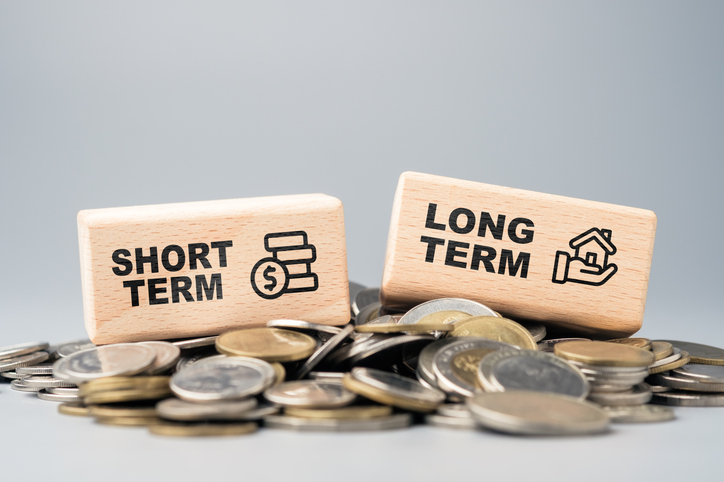
How Investors Perceive Short vs Long-Term Risks
Short-Term vs Long-Term: Understanding Risk Perception
Both seasoned investors and novices opting for supposedly secure options encounter various risks in this field on a daily basis.
Market volatility, price fluctuations, capital erosion, inflationary pressures, and liquidity challenges represent a substantial array of threats. Attempting to eradicate them entirely proves not just unfeasible but also detrimental. It’s essential to recognize that risk levels are intrinsically linked to prospective rewards: higher potential gains invariably accompany elevated risks. Nevertheless, these investment hazards can result in failing to achieve monetary objectives, incurring significant capital reductions, and triggering intense adverse emotional responses.
Precisely for these reasons, prior to committing funds, individuals should establish—preferably with guidance from qualified professionals—the risk tolerance they can manage emotionally and financially without devastating effects. Even when constructing a portfolio through expert-managed services, these factors demand careful consideration. Gaining insight into the actual effects of short-term versus long-term risks on investment outcomes proves invaluable.
Novice investors frequently prioritize immediate, tangible short-term risks over those that develop over extended periods, which are subtler and more challenging to discern. In the following sections, we’ll examine, in straightforward terms, public perceptions of short-term and long-term risks, along with strategies to mitigate common judgment pitfalls.
Short-Term Risks: Emotional Consequences
Constant access to financial news, real-time trading applications, and instant online market data empowers even amateur investors to track price shifts and volatility closely. Although this accessibility appears beneficial for monitoring holdings and informing choices, it frequently provokes anxiety, apprehension, and hasty responses.
Not all individuals react with alarm to abrupt market declines by liquidating positions hastily. Such reactions are more prevalent among those inherently prone to them or those who haven’t accurately gauged their suitable risk capacity. For them, routine short-term volatility registers as a severe peril, with portfolio downturns viewed as irreversible disasters, inciting panic and flawed decision-making. Swept up in momentary emotions, susceptible investors might divest at inopportune moments, crystallizing paper losses into actual ones.
Perception of Long-Term Risks
In contrast to conspicuous short-term risks that spark stress and rash actions, long-term risks tend to evade notice by non-specialists, garnering minimal focus.
Factors like inflation or forgone opportunities operate stealthily over time, manifesting effects that are gradual and inconspicuous. Purchasing power may diminish progressively, preserving nominal capital values yet curtailing buying capacity and impeding portfolio expansion. This subtle erosion enables investors to remain complacent, oblivious to accumulating deficits, which might also arise from suboptimal performance.
Effectively Assessing Short- and Long-Term Risks
Mastering objective risk evaluation poses challenges, particularly for newcomers. To sidestep errors—such as succumbing to stress-driven trades or neglecting critical threats—avoid fixating on trivial price variations.
Instead of obsessively monitoring stocks, bonds, and ETFs, entrust guidance to seasoned professionals for advice on asset selection, transaction timing, and responses to volatility or inflation surges.
Undoubtedly, precisely defining one’s risk profile remains crucial. This encompasses financial aspirations alongside personal and familial economic security, resource availability, psychological fortitude, and capacity to endure minor or major setbacks.
Moreover, proactive preparation is key. Engaging with educational articles and literature on investment hazards equips individuals with foundational knowledge to navigate both immediate and prolonged threats astutely.